Showing posts with label indian. Show all posts

Saturday, 8 February 2014

Aloo Tikki Style Celeriac Cakes - Using Up Sunday Leftovers


Following on from my last post about a Baked Celeriac Sunday roast, here is a quick recipe for using up the leftovers! I had about 1/4 of celeriac left so I combined this with some mashed potato (if you have roast potatoes left these work too) and lots of spices to create an aloo tikki style cake, which made for a simple Monday dinner.

I served the cakes with a tomato and fenugreek sauce, also made from some leftover tomato soup from Saturday evening dinner. I simmered it for about 20 minutes til it reduced before adding in turmeric, chilli, dried fenugreek (also called methi or kasoori methi) and grated ginger.

Apologies in advance for the worse than usual photography, let's give it the excuse that I was hungry and wanted to eat them up...

Spicy Celeriac & Potato Cakes
makes 4, enough for 2 

1/2 onion
1 clove of garlic
150g leftover cooked celeriac, mashed
150g potatoes, this can be leftover roasties too, mashed
1/2 tsp chilli powder
1 tsp cumin seeds
1 tsp ground coriander
1/4 tsp mustard seeds
1/4 tsp turmeric
sunflower or groundnut oil

Fry the onion in a large deep frying pan, until soft with a little bit of colour, for about 5 minutes. Add in the garlic and fry for another 1 minute stirring often. Add this to a large bowl with your potato and celeriac, and then add in all the spices, plus salt.

Mix and then form with your hands in to patties. If they aren't feeling substantial enough, pop them in the fridge for 10 minutes to firm up.

Heat some groundnut or sunflower oil in your large deep frying pan, and once hot add in your cakes. Fry on a medium high heat for 4 minutes on each side, try not to move them otherwise you won't get crispiness. Flip over and fry on the other side for another 4 minutes.

Serve with your tomato sauce and a side of veggies.

This post is part of Sainsbury's Love your Leftovers Campaign - thank you to Sainsbury's for sending me vouchers to use for this challenge :)

Pin It

Sunday, 2 February 2014

Indian Supperclub - a 3 course feast - date announced!


I've announced a date for my supperclub, and booking is open! It's been a long time in the planning and I'm so pleased to be able to bring you a taste of authentic Gujarati cuisine.

If you've not eaten for a while I suggest you get a snack as this post will make you hungry.


My first supperclub is on Saturday 22nd February in a beautiful spot just outside Cambridge, I'll be cooking a very traditional Gujarati meal - crisp samosas spiced with cumin and chilli to start, a range of veggie curries with rotli (chapati), rice and accompaniments finishing with a sweet tooth's dream of a dessert. The menu...

Mela Supperclub, 22nd February
foodmela.co.uk

Welcome Drink: Nimbu Pani (sweet lime drink)


Starter: Pea & Potato Samosas with green chilli chutney


Mains: Chana Masala, Toor Daal, Venghan Bateta (Potato & Aubergine)

Rotli, Rice, Kadhi (spiced yoghurt sauce), Raita and Pickle

Dessert: Gulab Jambu (doughnut like dumplings in cardamom syrup) 


with Jack's Mango Sorbet & Cumin Gelato


Masala Chai & Cardamom Shortbread


Places are limited, I've still a few spots left - email me deepa@foodmela.co.uk to book a place.
£32 pp and you can BYOB, there will also be plenty of nimbu pani to go around plus water and juice.

Read more here, and get a little sneak peek into my new blog: www.foodmela.co.uk 

See you there, come with an empty stomach! :)


Pin It

Monday, 27 January 2014

Restaurant Review - Red Onion Essex & Indian Food in the UK


I was recently contacted by a new Indian restaurant in Saffron Walden (Essex / Cambridgeshire border), Red Onion, to try out their menu. This post is two things really, a review of the restaurant and some ponderings about Indian food in the UK.

First, the Red Onion. It is a curry house based just around the corner from Saffron Walden Common, which opened last year.


For starters we had onion bhaji and Aloo Chaat. The onion bhaji was pretty textbook, they were crispy and quite big and not too oily- and served with that random salad that no one ever eats. My aloo chaat, was just a plain potato curry - what I had hoped for is spicy potatoes with crispy sev (chickpea noodles) or fried chapati with yoghurt and tamarind, that is what chaat normally consists of - it's about textures. This was unfortunately a potato curry with cucumber in it, bizarrely. It was good to see it on the menu but unfortunately it wasn't an aloo chaat.


For mains I ordered a lamb achari - the lamb was nice and tender and the sauce was tomato based with good heat and a lemony kick. Mr had a vegetable bhuna - a nice tomatoey sauce with good heat, but the vegetables seemed to be from those frozen 'vegetable mixes' you get in big bags. We also ordered muttar paneer, usually cooked with onions and a little tomato with plenty of chilli, and peas of course, our dish was coconut based, which I like with paneer, but unfortunately it was cloyingly sweet. I wouldn't have minded a little chilli powder!

We decided to try out some different breads - garlic naan, roti and chapati. The naan was really nice, fluffy inside and crispy on the bottom. The chapati was good, nice and soft and mopped up the curry well. The roti, I think it differs from the chapati as it is cooked on a tandoor, was nice too, possibly a bit too crispy.


To finish we decided not to go for the oddly presented kulfis (in coconut shells, plastic pineapple shells etc) that you always find in curry houses, but for a cup of masala chai each. Like the aloo chaat it was nice to see it on the menu, the tea was good although, I think, made from a spiced tea bag rather than brewed with a masala mix, meaning it wasn't as strong as it should be.


Overall it was a nice meal, and if you're after a 'British Curry' then that is what it will offer you. We really liked the breads and the sauces in each of our curries were good. The starters could use some work and the paneer was a little bizarre.

I think food in general has improved tenfold UK over the past 10 years, British food is better than ever, but I feel understanding about what Indian food, and probably that of other countries, is seriously lagging behind. A curry house will tell you that you are eating authentic Indian food when you're tucking into a chicken korma, dipping plain poppadoms into mango chutney, and that strange thin yoghurt sauce. When you're eating orange pilau rice and fighting your way through an oil soaked onion bhaji.

For me a curry house curry is a bit of a guilty pleasure, a bit like MacDonald's or a fish finger sandwich. It's mostly not authentic (a lot of Indian restaurants dishes are actually based on Bangladeshi cooking with Anglicised additions) but it is comforting in a way.

I think curry houses can give Indian food a bad rep. Indian food is different in each region you visit - and it is not always as unhealthy as it has a reputation for - yes we like our samosas and sugary snacks, and ghee is used - but everyday Indian food is fresh and nourishing. Lentils, fresh vegetables, wholewheat chapatis and pickles. It's not just cubed meat in a sauce served with a naan or rice.

This article in the Guardian about 'how to eat curry' is great - it explains what to look out for (south Indian food, pure vegetarian food) and what to order. Searching out restaurants like this is nearly always a good idea - you'll find plenty of them in Leicester, parts of Birmingham, Southall, Wembley and Ilford. South Indian restaurants will offer you a thali (plate) filled with different dishes, or a crispy dosa stuffed with homemade paneer or spicy potato. Pure vegetarian restaurants, which are often Gujarati (like me!) will serve chilli paneer, the best daal, chaat and sometimes gulab jamun for pudding.

Thanks to the Red Onion, Saffron Walden for inviting us for dinner. You can find out more about them here.


Pin It

Saturday, 28 September 2013

Samosas from Scratch


I love samosas - they are the best Indian snack food but sadly, as popular as they are, they are rarely good. A good samosa should be crispy on the inside and soft and delicately spiced in the middle. The crispy pastry is made from rotli/chapati dough (not filo) with added salt and lemon juice - the dough discs are half cooked before being filled, folded and fried. The traditional Gujarati filling is a potato and pea with garlic, ginger, onion, chilli and turmeric. Coriander seed and cumin is also added.The other common filling you'll find (in meat eating areas) is minced lamb - flavoured in the same way and sometimes with clove and cinnamon.

Allow yourself a few hours in the kitchen, samosas have several steps to them and they are perfect if you want to spend a Sunday afternoon in the kitchen. Each step is quite straightforward - as long as you take your time you'll be ok.


Pea & Potato Samosas - makes 15 samosas, easily doubled

Step 1 - Pastry dough

150g chapati flour or plain flour
optional 2 teaspoons of fine semolina (my addition for crispier samosas)
4 tablespoons of vegetable oil
pinch of salt
2 teaspoons of lemon juice
boiling water - approx 125ml

Rub together the flour, semolina and oil, til it is all combined. Add in the salt and lemon juice and mix with a fork. Add in half of the water and stir with a fork, add the other half and mix again with the fork. As it starts to come together get in with your hands and knead into a soft but not sticky dough.

Divide into balls, approximately the size of a lime and then roll each out in to a circle. You want the pastry to be fairly thin, about 2mm. Save a couple of small pieces of pastry, to test the temperature of the oil later (or you can use a cube of bread or potato).

Heat a non stick frying pan, or tava, til it is very hot, then turn down to a medium heat.
You can roll out all your pastry circles and lay them out and cook one after another, or roll as you cook - it depends if you can keep an eye on both!

Cook the circles for 30 seconds minute on each side, just enough to lightly colour them. You want the dough to be half cooked, so they are easy to fill and also to fry later. Stack up on a plate as you cook them. Cover with a clean, damp tea towel as you make the filling.

Step 2 - Pea & Potato

3 medium potatoes, diced
100g frozen peas, defrosted
1 onion, diced
1 clove of garlic, minced or finely chopped
1/4 green chilli, chopped finely
1 teaspoon of grated fresh ginger
oil
1/2 teaspoon of cumin seeds
1/2 teaspoon of coriander seed, crushed
1/4 teaspoon of tumeric
pinch of salt

Fry the onion til translucent, then add the garlic and ginger and fry for 30 seconds. Add the potato and stir well - then add in the chilli and the spices along with a pinch of salt. Fry for a few minutes on a medium-high heat, stirring all the time. Then add a splash of water, and cover. Reduce heat to medium/low and cook with the cover on for about 4 minutes. Remove the cover, stir, simmer for a few minutes if you need to reduce the water a little. Switch off the heat, stir in the peas, and leave to cool.

Step 3 - Folding and Filling


Flour and cold water for glue.
Teaspoon
Large plate for your finished samosas

Make a glue by combining about 2 tablespoons of flour with half that amount of water, adjust til you get a thick but spreadable glue.

How to Fold a Samosa:
How to Fold a Samosa

Dab glue on to the straight sides of the samosa wrapper, fill with potato filling and then glue the top closed. Check for gaps and dab some glue on to the point and squeeze closed.

At this stage, if you'd like to save the samosas for another time, you can freeze them on a baking tray - once frozen put into a freezer bag. Defrost fully before you come to fry them.

Step 4 - Frying

300ml vegetable oil
medium large saucepan

Add vegetable oil to a medium saucepan and heat on a high heat for a few minutes, then turn down to medium. Test the temperature by adding a small piece of pastry to the oil, if it bubbles and rises to the surface within 10 - 15 seconds the oil is done.

Add about 4-5 samosas to the pan and fry for around 4-5 minutes til deep golden colour. Turn them every minute or so to ensure they cook evenly. Too high heat will cause the pastry to burn and not cook through, a medium high heat will ensure they stay crisp but not oily and cook throughout. Once done, remove and drain on kitchen paper.

Baked Version: I also tried baking some, which turned out nicely, not as flaky but still crispy and crunchy - and of course a little healthier. Brush with oil and bake on a tray in a medium oven for 20 minutes, turning half way through. 

I really hope you make these, you won't be disappointed! I've got 10 of them stashed away in the freezer, a smart move as the first batch disappeared in minutes.

Pin It

Sunday, 28 July 2013

Homemade Garam Masala


I've always bought Garam Masala, sometimes from an Indian grocer but more often than not from the supermarket, which I have now learnt is not a patch on making your own.

Googling for recipes I've learnt that everyone, and I mean everyone makes theirs differently. I think it depends on what you prefer, spice wise. Some add cinnamon or turmeric, I preferred to leave these out - cumin, coriander and cardamom are the flavours I really wanted to stand out in my masala.

Ideally you need a grinder, I have an attachment for my blender which grinds spices. Some also use a coffee grinder, but do bear in mind if you use it for spices it isn't wise to use it again for coffee - it will have to be your spice grinder from then on. If you have neither then a pestle & mortar will work, but will obviously take longer.

It's very simple, just add all your spices to the grinder and give it a whizz until it is a fine powder. Decant into an airtight jar - jam jar or kilner jar is perfect, and store in a cool, dark place.


My garam masala has a little twist - local chilli purveyor, Ben of Capiscana Chilli Co. recently tweeted that he'd made his own mix using one of his dried Mexican chillies; I was very intrigued and with Ben's gift of a parcel of Ancho Poblano and Pasilla Chillies I decided to make my own masala. I used about 1 inch piece of each dried chilli (seeds included) and whizzed it up with the other spices.


Garam Masala
Makes about 70g of masala.
Easily doubled/tripled, but don't make too much, fresh masala is better masala.

2 teaspoons of coriander seed
2 teaspoons of cumin seed
1 teaspoon black peppercorns
3 bay leaves
6 cardamom pods - use the black seeds inside only 
4 cloves
1 inch piece of poblano chilli, chopped
1 inch piece of pasilla chilli, chopped


The addition of the Mexican dried chillies gave a great kick to the masala as well as a nice fruitiness and smokiness. I've already added some of it to recipes I'm cooking for my Indian Afternoon Tea and it is 100 x better than any garam masala I've bought before. 

Try it out, it's easy!


Thank you Ben for sending me the chillies!

Pin It

Sunday, 7 July 2013

Barbecued Paneer with chipotle marinade


This is barely a recipe, because it is so very easy, but more of an idea really. Paneer is great on the barbecue, and just because it is an Indian cheese doesn't mean you have to put Indian flavours with it - chiptotle works a treat. I prefer using paneer to halloumi, it is less melty and won't stick to your barbecue grill.

When shopping for some very important meringue nests, to make Eton Mess during the Wimbledon match (We're having a very stereotypical English summers day here...), I spotted Wahaca sauces were on offer in Waitrose, £1 a bottle.


I cut up the paneer in to four chunky pieces and then coated them in the sauce, about 1/4 of the bottle. It only sat for about 10 minutes before going on the barbecue, but this was fine. If you brush over the marinade during cooking it will boost the flavours. We barbecued the paneer for about 3-4 minutes on each side til crispy and charred. Folded up in a flatbread with some salad, it was perfect vegetarian barbecue food.

You could make your own marinade - maybe with some ketchup, oil, balsamic and chipotle in adobo. But when you are pressed for time (the Wimbledon final was an hour away) the Wahaca sauces are great - really smoky with a nice heat and richness from cocoa. I'm going back to buy the other two sauces in the range!

On a related note, I contributed to a Local Secrets article by fellow Cambridge blogger, Heidi Sladen - read more about my barbecue tips for veggies here. It's not all about dry soya burgers and vegetarian sausages!

Pin It

Saturday, 29 June 2013

Mumbai Disco Fry Eggs


Definitely the winner for best name ever for a dish. Helen (Food Stories) blogged about this recently and it quickly became something loads of people on my Twitter stream were cooking up for themselves. I've never heard of it before but it seems to be made in several places in Mumbai. It's a mixture of soft fluffy eggs and crispy bread fried up spices and lots of chilli.

You break eggs into a pan of very hot oil, add spices then lay two halves of a white bread roll on top, add more spices and then begin a lot of squishing and flipping to get a crispy, eggy spicy flat pancake sort of thing.

It's a super easy breakfast or lunch and you'll probably have all the stuff in your kitchen already. Do it!
Helen also says it is a perfect hangover cure, but I've not had a hangover to test that out on, but I can see how it is.

Find the recipe here (and watch the video).

Pin It

Tuesday, 4 June 2013

Bhel Puri


Hands down, bhel puri is my favourite savoury thing to eat. Closely followed by pani puri and then from a completely different culture - macaroni and cheese.

Bhel Puri is a type of Chaat - which is simply savoury snacks sold at the roadside all over India, but many associate them with cities like Mumbai and Delhi. I love the origin of the word chaat.

From Wikipedia "The word derives from Hindi cāṭ चाट (tasting, a delicacy), from cāṭnā चाटना (to lick), from Prakrit caṭṭei चट्टेइ (to devour with relish, eat noisily)."

You can also buy (or make yourself) chaat masala which is made up of amchoor (dried mango) powder, black salt, coriander, ginger, salt, pepper, asafoedita and chilli powder. This is used in all kinds of chaat to easily season, plus it tastes great! Add it to your next chickpea curry.


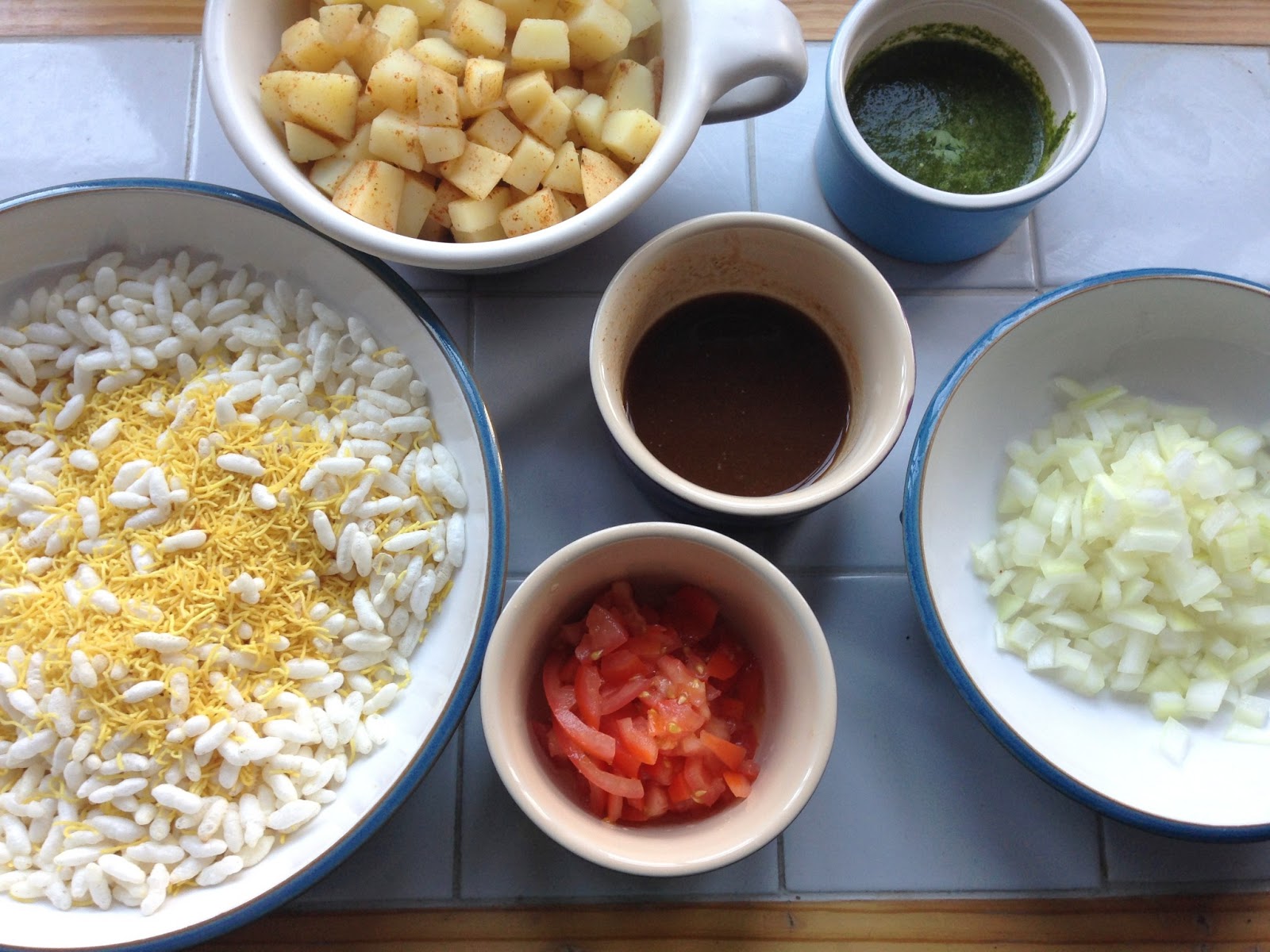
Bhel puri offers everything - it is a Gujarati snack made popular in Mumbai by migrants to the city-  it's crispy, crunchy, soft, sweet, savoury, spicy and sharp. The base is a mixture of puffed rice (mamra) and fried chickpea noodles (sev) which is then topped with chopped onion, sometimes tomato, boiled spicy potato (often with chaat masala), mint chilli coriander chutney and tamarind chutney. You mix it all together and eat it up immediately whilst it is still crunchy. Fancier versions I've had, at Dishoom for example, also contain pomegranate or diced mango.

As I've said, it is traditionally a snack, but if you love it like I do, it's more than ok to eat three portions and call it dinner. You'll find sev, mamra and tamarind in most Indian grocers and also very large branches of the main supermarkets. If not The Asian Cookshop has everything you'll need, and their delivery charges aren't too dear.

Tamarind can be bought in a large scary looking block, which needs to be soaked and then passed through a sieve, it is a bit of work but you can freeze the resulting paste and take out as needed. You can also buy jars of tamarind paste in most supermarkets, but it often has added ingredients.

Bhel Puri Serves 2 generously for dinner, 4 for a snack 

 200g sev
200g mamra puffed rice
 ½ onion, diced finely then soaked in water
 2 medium sized potatoes diced and boiled
¼ tsp chilli powder
½ tsp chaat masala salt (boil til soft, drain, cool and then add seasoning and spices) 
2 tomatoes, diced

 Green Chutney 
15 mint leaves
large bunch of coriander
¼ tsp garam masala
¼ tsp cumin ½ cm ginger salt
¼ green chilli (or more to your taste!)
4 tablespoons of water
1 tablespoon lemon juice
scant 1 tsp sugar 

Blend all the ingredients in a food processor - you want a thin sauce, a bit like salsa.

Tamarind Chutney 
1 tablespoon of tamarind paste
1 ¼ tsp caster sugar
pinch of garam masala
5 tablespoons of water
pinch of salt

Add all the ingredients to a saucepan and simmer over a medium high heat til boiling. Turn down and then simmer gently for 5-10 minutes til it thickens to just a little thinner than ketchup.

To Serve
When serving put all your separate ingredients in to bowls and then let diners make their own bhel puri by piling up ingredients and chutneys to taste in a bowl.


I'll be serving bhel puri plus plenty of other yummy things at my upcoming Gujarati Supperclub in Cambridge in August, dates to be announced soon - sign up to the mailing list here

Pin It

Monday, 29 April 2013

Gujarati Kadhi - Yoghurt 'Sauce'


It is very hard to describe what kadhi exactly it, it is basically a yoghurt and gram flour based sauce/soup/gravy for rice. You can also add it to dry curry dishes, like potato. I blogged Kitchri a little while ago, a soothing lentil rice dish gently spiced with turmeric and garlic - kadhi is the best companion for kitchri. You can also have kadhi with plain boiled basmati rice.

Kitri and Kadhi is wonderful when you are sick, it is simple, soothing and comforting - I think it has medicinal qualities similar to chicken soup! I got it together to make this on a weekend when we were both ill with a horrible cold virus thing that caught as at the end of a long winter, it is very easy to make and gentle on a tummy that has been punished by too many Hall's Soothers and Paracetmol pills.

Gujarati Kadhi
makes 4 portions, keeps well in the fridge for a few days

250ml natural yoghurt
2 tablespoons of gram flour / chickpea flour
about 1cm of grated fresh ginger
1 tbsp sugar
750ml cold water
salt
coriander

for tempering:
1-2 dried red chillies - depending on how hot you want it
pinch of asafoetida
1/2 teaspoon cumin seeds
1/2 teaspoon black mustard seeds
vegetable or sunflower oil


1. Whisk together the yoghurt, chickpeas, ginger, water in a bowl.
2. Heat the oil and add all the tempering ingredients once the oil is hot.  When the mustard seeds begin to pop add in the yoghurt mixture and then water and salt.
3. Bring to the boil, be careful it doesn't bubble over the top. Then let simmer gently for about 5 minutes, whisking occasionally to stop any lumps.
4. Taste and season again if you need to, and then add the fresh coriander.


Serve with kitchri or plain basmati rice.
The traditional way to serve it is in a small cup and let each person add the kadhi to their rice as they eat. I sometimes like to drown my rice in it, but at other times add a little to make it drier, it all depends!


Pin It

Tuesday, 26 February 2013

Chai Masala Biscuits


Whilst making a cup of masala chai the other week I was thinking what a good idea it would be to put some of the masala into a batch of biscuit/cookie dough. I've made spiced cookies before, with a bit of ginger or cinnamon, and the punchy chai masala would probably work just as well. And I am pleased to say it did!

The masala mix is made up of cardamom, cinnamon, cloves, black pepper, ground ginger and nutmeg, I bought some back from India, you can either buy some from your nearest Indian supermarket, grind your own or use the individual spices in the cookie mix. Some larger Tesco stores might even stock it now too.

I used a basic cookie dough from BBC Good Food, which if you read my blog regularly you'll know is a site I use a lot, there are tons of recipes on there and their baking section contains lots of classic recipes - basic sponges, shortcrust pastry, fruit cakes, mince pies. Good stuff.

The biscuits are quite like shortbread, and the masala gives a nice little warmth. If you are a hardcore dunker (well done) I would suggest making them 1.5cm thick instead of 1cm as below.

Chai Masala Biscuits
adapted from BBC Good Food

Makes about 30 cookies, maybe more.I froze half the dough (wrapped in cling film and then put in a sandwich bag), my standard behaviour when making biscuits or cookies - so that I have a stash for when I really crave them.

250g softened unsalted butter
140g sugar
1 egg yolk
2 tsp of vanilla extract
295g plain flour (plus extra for dusting)
5g chai masala or mixed spices

Optional:
50g chocolate melted with 5g butter (to keep it shiny) for dipping
Extra sugar and chai masala for sprinkling on before baking / onto the chocolate

Preheat your oven to Gas Mark 5 / Fan 180 / Electric 190 
Cream together your butter and sugar til combined well and nice and fluffy.
Add in the egg yolk and the vanilla extract and mix in well.
Sift in your flour and masala, mix in - you'll need to get in with your hands here and knead to a dough. 
Add a tiny bit of water at a time if it seems a little dry.
Knead very briefly to a soft dough, wrap in cling film and chill for 20 minutes.

Roll out to about 1cm thick and cut into whatever shape you fancy, with a knife or cutters.
Lay on a baking tray lined with greaseproof paper. You can put them reasonably close together as they don't spread too much during baking.
Sprinkling the biscuits with a little chai masala mixed with sugar before baking gives a nice crunch when they are baked.

Bake for 10 - 12 minutes in the centre of the oven.
They can go from not cooked to brown in 30 seconds so keep an eye during the first batch, your oven may behave differently. 

Cool on a wire rack, you can either now eat them or dip them in melted chocolate and leave to set. 
I couldn't stop fiddling around with them and sprinkled the unset chocolate with a little chai sugar for extra spiciness.

Pin It

Thursday, 21 February 2013

Chilli Paneer


'This is the best thing you've ever made,' was the comment from the Mr about this chilli paneer, so despite the really quite terrible photograph I took hastily (because I wanted to hurry up and eat), I have decided that I really ought to blog this recipe. I haven't received a review like that in a long time.

Chilli Paneer is one of those things I've eaten quite a bit of but never really known what goes into it or how it is made - only recently did I realise it was Indo-Chinese-ish as it has soy sauce in it. The Indian part is made up of the paneer cheese and the rest are ingredients used in both countries (garlic, ginger, chilli, onion).

It differs from the Indian style muttar paneer which has more tomato in it along with the traditional spices - garam masala, turmeric, cumin, coriander. This version is a lot simpler and the soy sauce gives it a rich flavour without too much faffing about with lots of ingredients. In India we had 'Manchurian Paneer' which is another Indo-Chinese dish, it was deep fried crispy paneer in a rich dark sauce - I think with five spice and soy - with lots of spring onion and ginger, something I want to recreate, although I think without the deep frying.

This is very easy to put together and you'll probably have most of the ingredients already. Serve with basmati rice or naan, pitta, roti or other flat bread. Most of the recipes I came across also contained bell pepper, I'm not a huge fan of these and I didn't have any, so I didn't put any in. If you like them add one diced pepper in with the onion.

Chilli Paneer
Adapted from various recipes including Simply Tadka and BBC Good Food.
Serves 2-3

200g block of paneer, diced into about 1 inch pieces
cornflour
sunflower or mild olive oil
2 red onions, finely sliced
1 bell pepper, diced (optional)
2 cloves of garlic
about 1tsp of grated ginger
1/2 tsp - 1 tsp chilli flakes - depending on your chilli tolerance
2 tbsp tomato puree
2 tbsp dark soy sauce
boiling water

1. Dice up your paneer and then toss it in some seasoned cornflour. In a large saucepan shallow fry the pieces in a small amount of oil til golden brown on all sides, do this in batches if you don't have room. Remove and drain on kitchen paper.

2. Add the onions and pepper if using and fry in the oil til quite soft, add a pinch of salt to stop them burning and to realise the juices, it should take about 5 minutes for them to soften. Whilst they are frying mix the tomato puree and dark soy sauce, then add boiling water til it is the consistency of single cream.

3. Add in the ginger, garlic and chilli flakes to the saucepan and fry for a minute. Lower the heat and add the tomato soy sauce mix and then the paneer. Stir to combine everything and keep on a medium heat to simmer gently.

4. The sauce will start to thicken now, because of the cornflour in the paneer, add more water if the sauce starts to reduce too much. Simmer for about 10 minutes on a medium heat, stirring and checking the sauce. Season to taste, add more chilli flakes or soy if necessary and serve.

Pin It

Sunday, 10 February 2013

Kashmiri Dum Aloo


One of the tastiest but also the most disappointing dishes we ate in Mumbai was Dum Aloo. That might sound a little strange, but let me explain, some of the potatoes were cooked and others were raw, which ruined what was otherwise a tasty meal - the sauce was still delicious.

Dum Aloo is a potato in a creamy tomato spiced sauce, cooked for a long time til the potatoes are tender. I believe 'Dum' refers to cooking in a pot sealed with dough, so the moisture remains inside during cooking. Aloo means potato.

The potatoes are first deep fried, although I shallow fried mine in a couple of tablespoons of oil which worked out just fine and removed some of the faff from the recipe. Then you fry onion, garlic, tomato paste and ground spices before adding tomatoes and a little water, and then the potatoes.
You can then either make a dough or make a cartouche, which is a lot easier, to 'seal' the dish and keep the moisture in. I used a large heavy casserole dish which has a tight fitting lid, along with my cartouche - made of a round of greaseproof paper placed directly on top of the simmering potato and sauce. The cartouche is then removed, and the sauce thickened by simmering without the lid, before cream and fresh coriander is added to finish.


We ate it with freshly made rotli (or chapatis which is what you may know them as) - more on that soon! In Mumbai we had them with soft naan and juicy limes. I made the entire recipe, that serves 4, and there were lots of leftovers which tasted even better the next day.

It is important to use really good quality potatoes here, they are the centre of the dish and I think any old spuds might not tastes as good as a Jersey royal or a similarly good new potato. I adapted the recipe from the brilliant Ko Rasoi blog, missing out some of the spices and using a little less sugar, salt and cream to my taste.

Kashmiri Dum Aloo
recipe adapted from Ko Rasoi
serves 4

450g Jersey royals or good quality new potatoes
2 tbsp of groundnut or sunflower oil
2 tbsp of tomato puree
1 tin of plum tomatoes
250ml water
1 tbsp of grated ginger
3 cloves of garlic, crushed
2 tsp of sugar
2 tsp of salt
150ml of double cream

Spices - grind these in a pestle and mortar together
2 tsp of fennel seeds
2 tsp of chilli flakes
1/2 tsp of cumin seeds
1 tsp of coriander seeds
1/2 tsp of ground ginger

Chopped coriander to garnish

1. Keep your potatoes whole for this recipe, if you have any large ones cut them up to around 2-3 inches long, and keep the skins on. Heat the oil in a large casserole dish and fry the potatoes til they are golden brown on all sides. Remove the potatoes and set aside.

2. Fry your ginger then garlic, and then add in the tomato puree and fry for 1 minute. Then add the spices and fry for a few minutes, add a little water if it starts to stick. Add the tin of tomatoes, sugar, salt and water. Bring to the boil and then down to a gentle simmer.

3. Make your cartouche by cutting greaseproof paper to the same size as the pot and place over the bubbling dish. Put the lid onto the pot and turn down to the lowest heat. Simmer for at least 30 minutes, or until the potatoes are completely cooked.

4. The sauce might need thickening at this point, if so just simmer til it is the right consistency. Then add in the cream and simmer for a few minutes more, being careful not to over boil. Season if needed and then add in some fresh coriander before serving.


This is a lovely comforting dish for a very cold day, and it isn't too spicy - if you aren't keen on chilli you can dial it back a little and it will taste just as aromatic but without the kick.

Pin It

Wednesday, 6 February 2013

Masala Chai


Whilst I was in India the tea I drank was almost exclusively masala chai, I did try some 'English tea' out there but they use buffalo milk rather than cow's milk which gives the tea a strange taste, something a good dose of masala gets rid of. So it was masala chai from then on.

First of all a rant word about the word chai. It really bugs me when I see someone talking about 'chai tea' - what you are essentially saying there is 'tea tea' because the word chai means tea. Chai doesn't refer to the fact that it is spiced tea, but chai means tea. Simple as that. Hence why you call it masala chai because it is tea spiced. This also applies to lentil dahl. Dahl means lentil so lentil dahl is lentil lentil.  Glad I got that off my chest.

Masala chai is drunk everyday by most Indians, I tend to drink it occasionally  maybe once a week. I particularly like it when it is a very cold day or I am feeling a bit under the weather - sweet, spicy hot tea is the best thing for these situations.

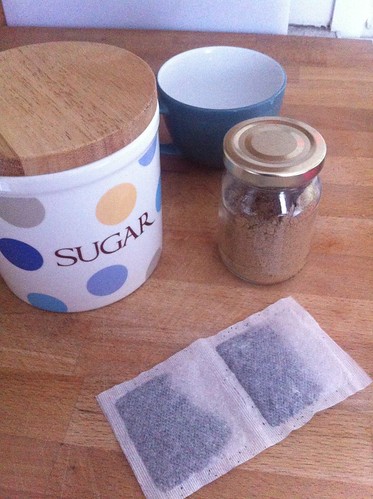
It takes longer to make than an average cup of tea but it is so worth the time. Normally it is not recommended to boil tea or use boiling water on tea, but here you boil it twice - once with masala and then once after adding milk. This way the spices really get into the tea and the tea brews quite strongly to compete with the spices. You don't necessarily have to use a really good quality loose tea here either, the contents of a couple of teabags will do!


You can buy tea masala in most good Indian grocers, I have found one place online, or you could try making it yourself. It is a mix of cardamom, cinnamon, cloves, black pepper, ground ginger and nutmeg - this recipe is pretty good.


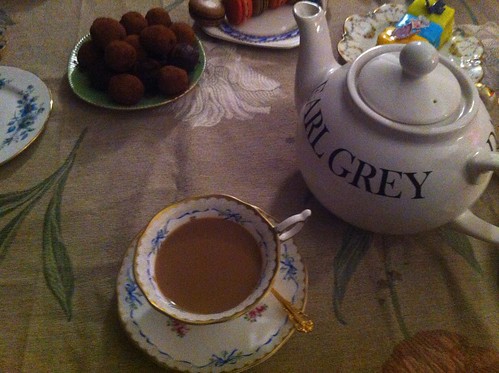
I made this last weekend with the lovely Miss Sue Flay, who was very keen to learn how to make proper masala chai. We served it in a teapot with dainty little tea cups, but masala chai is equally at home in a big mug, or the traditional way - in a tall glass. We indulged in a yummy baked mocha alaska and rich chocolate truffles made by Miss Sue Flay.

Masala Chai
makes 3 tea cups or 2 mugs

You need:
Medium sized saucepan
Strainer
Teapot (optional, you can serve straight from the pan)

2 tea cups full of cold water
2 tablespoons of black tea
2 teaspoons of sugar
1/4 teaspoon of chai masala
1/2 tea cup full of semi skimmed or whole milk

Add the water, tea, sugar and chai masala to the pan. Bring to the boil on a high heat. Once the tea is boiling vigorously, after about 5 minutes, add in your milk. Turn the heat down slightly and wait for it to boil again, be careful at this stage as it can boil over the side of the pan really quickly! When the milk boils to the top (about 2-3 minutes), remove from the heat, strain into your cup - or leave unstrained and serve in a teapot.

Sometimes you'll get a skin on your tea as the tea cools, just remove this with a spoon and it is ready to drink.

Pin It

Sunday, 3 February 2013

India


Well, I'm back from what was probably the trip of a lifetime. Before going I was excited but also nervous, having never been to India before, or even a 'non Western' country before either. India was many things, crazy, hot, interesting, funny and fun , beautiful, varied, dusty and just plain full on. And of course the food was great.

Unlike most of my holidays this was not totally centered around the food - I didn't have any places jotted down in a notebook that I had researched online - I left it up to my parents and whatever and wherever we happened upon on the day. It was quite nice to go with the flow.


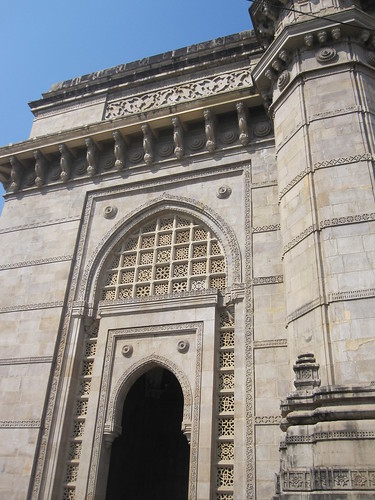
We spent 3 days in the crowded city of Mumbai - visiting the sights, taking tea at the famous Taj Mahal Hotel, shopping in the super sleek malls and also the higgeldy piggeldy street markets. The pollution and the crowds were hard to handle and crossing the road is plain terrifying.


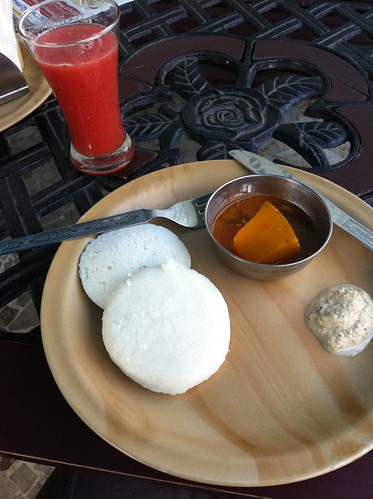
Our hotel did brilliant breakfasts - things like Idli Sambar (above) and Batata Vada for breakfast along with big bowls of juicy papaya and super fresh watermelon juice to wash it all down. We ate mostly in the hotel restaurant - paneer in buttery spicy sauces, tandoori naan breads - crispy and soft all at once, black dahl and vegetable koftas.

After that we left for Navsari in Gujarat, which is where my extended family live. There was plenty of visiting family but we also did a lot of shopping in the many sari shops and jewellery shops. Here we ate with our family - lots of vegetarian food - plenty of dahl bhatt, kadhi and vegetable rice and 'curry' made with the freshest vegetables. Everyone in the smaller towns shop one meal at at time in the local market, getting their vegetables in the afternoon and cooking them a few hours later in the evening. As much as I appreciate the convenience of a supermarket for people like me who work all day, it is nice to see people eating food that is fresh and local.


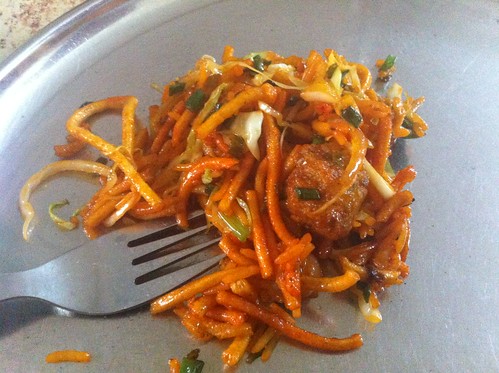
We were also introduced to the concept of Chinese Bhel Puri (crispy fried noodles, little spring onion and soy koftas with crunchy vegetables) and Manchurian Paneer at a local hotel restaurant - Chinese food is really popular in India and something I want to recreate soon. Breakfast was always a masala chai, sometimes with some toast and sometimes with some fruit, normally a 'chiku' which is a soft sort of fibrous sweet fruit- very hard to describe how it tastes. I didn't like most of the fruit in India, the textures are so different compared to what we are used to over here - but I did like the little chikus we bought.

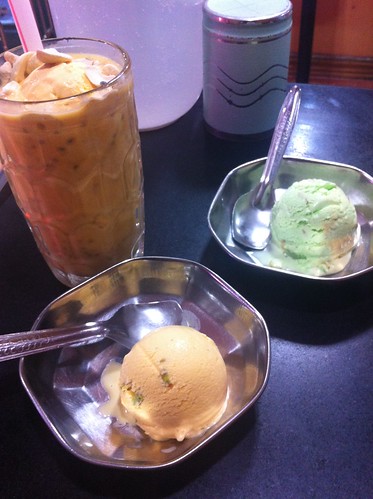
Kulfi is a big thing in India, ice cream basically, and there are lots of flavours in the ice cream shops in you find in India. We stopped in once place in Navsari - the flavours above are pistachio mango and at the back Paan Masala - which is the flavour of the tobacco filled leaves that people chew after a meal. At the back is the famous milky drink, Faluda - made with mango. 


After 5 days in the small town of Navsari we left to travel the rest of Gujarat and the north of India. We visited Virpur, Somnath and then down to the beach at Diu. This took a couple of days just in one state, India is such a huge country, it is mind boggling. Diu was a nice relaxed beach resort, I remember we had a great spinach chicken dish in the hotel restaurant.

After this we left to go further north into Rajasthan - we stopped a night at Udaipur in a beautiful hotel made mainly out of marble.


Then onto Jaipur - the pink city - which was my favourite city of the visit. We visited the Amber Fort up in the hills - built for Raja Man Singh in the 1600s - it is high up in the mountains above Jaipur (the view from the top is the photo above). The views are amazing and the place itself is awesome, I can't think about how they built such an impressive place in that time period in that location. The pink part of the city is beautiful, the vegetable dye is so vibrant and they still use the same methods to this day to preserve the pink city. Jaipur is famous for its textiles, we visited several textile shops and I bought a lovely quilt to take home with me. Food highlights were less impressive than the rest of the holiday- we ate in KFC eating curry crunch chicken!


Next we went onto Agra to visit the Taj Mahal. All the things that can be said have been said about the Taj Mahal - it is truly a beautiful building and so well preserved, our guide told us the story behind it and I've heard it many times but it is still a great story. Oh and the bit about the King cutting off the hands of the builders is a myth, he didn't do that.

After Agra we headed to Delhi for a whistlestop tour of the city. We visited the recently built Akshardan Mandir - a Swaminaryan temple made from marble, completed in 2005. Then we drove around the city and saw India Gate, the parliament buildings. We visited the house Gandhi stayed in and where he was assasinated, along with Rajghat park which is where the memorials for Mahatma Gandi, Indira Gandhi and Rajhiv Gandi are.

After Delhi we started on the long journey back to Navsari, stopping in Jaipur over night. This is when you really realise how big the country is, it takes about 6 hours to get from Delhi to Jaipur and then another 15 hours from Jaipur to Navsari again. Crazy. We were tired.


Our last few days were spent in Navsari staying in a swanky hotel which did excellent breakfasts. My favourite was the Poori Bhaji which is potato curry with big crispy pooris. I had this on the day that the cold I'd caught (I know) was at its worse and it totally fed my cold like a boss. This is on my 'to cook' list too. Parathas also featured at breakfast time, and also good old toast for when we needed something plain to break up all the spice. We had more family meals too.


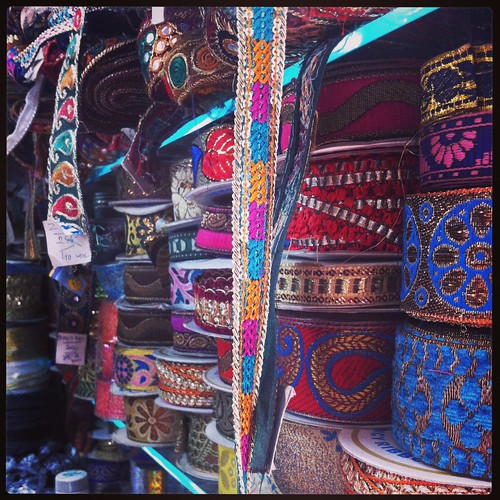
Overall the trip was great, it was tiring and I felt a long way from home at times but it was also a brilliant experience. I want to recreate so many of the meals we ate over there - I've already made Dum Aloo and Pav Bhaji which I'll be posting on here soon, along with making the effort to make rotlis more often than I normally do too. The colours, saris, silks and designs in India are giving me lots of jewellery inspiration too.

I've got lots more pictures on my Flickr stream, not just food ones too!

Pin It